Two Vintage Filet Crochet Patterns from 1915 — Free, Modernized, Bilingual
One of our users dug up the 1915 Handbook of Crochet No. 2, a slim pamphlet that Needlecraft Magazine sold for twelve cents and that the Antique Pattern Library scanned into public domain decades later. Inside are two filet patterns that still hold up: a butterfly insertion strip and an owl medallion. We digitized them into CrochetPop's chart editor, modernized the notation, and added a work-direction toggle that the original book quietly assumed — pick row-by-row or column-by-column without rewriting anything.
What you get
- Two free filet charts already loaded in CrochetPop's editor. One click and you're picking colors, resizing, or just hitting Start Working.
- Modernized notation. The 1915 book wrote "tr" for what we now call "dc" — a notorious gotcha for anyone who has tried to crochet from a pre-1930s pattern. We translated everything to modern US terms.
- Bilingual row instructions (English + 中文). Spanish coming soon.
- Row-vs-column work-direction chooser. The same chart can be crocheted either way — and for the butterfly the original book actually intended column-by-column (it's a horizontal insertion strip). The chooser shows you the trade-off in transitions and stitches-per-row, then pre-selects the friendlier direction.
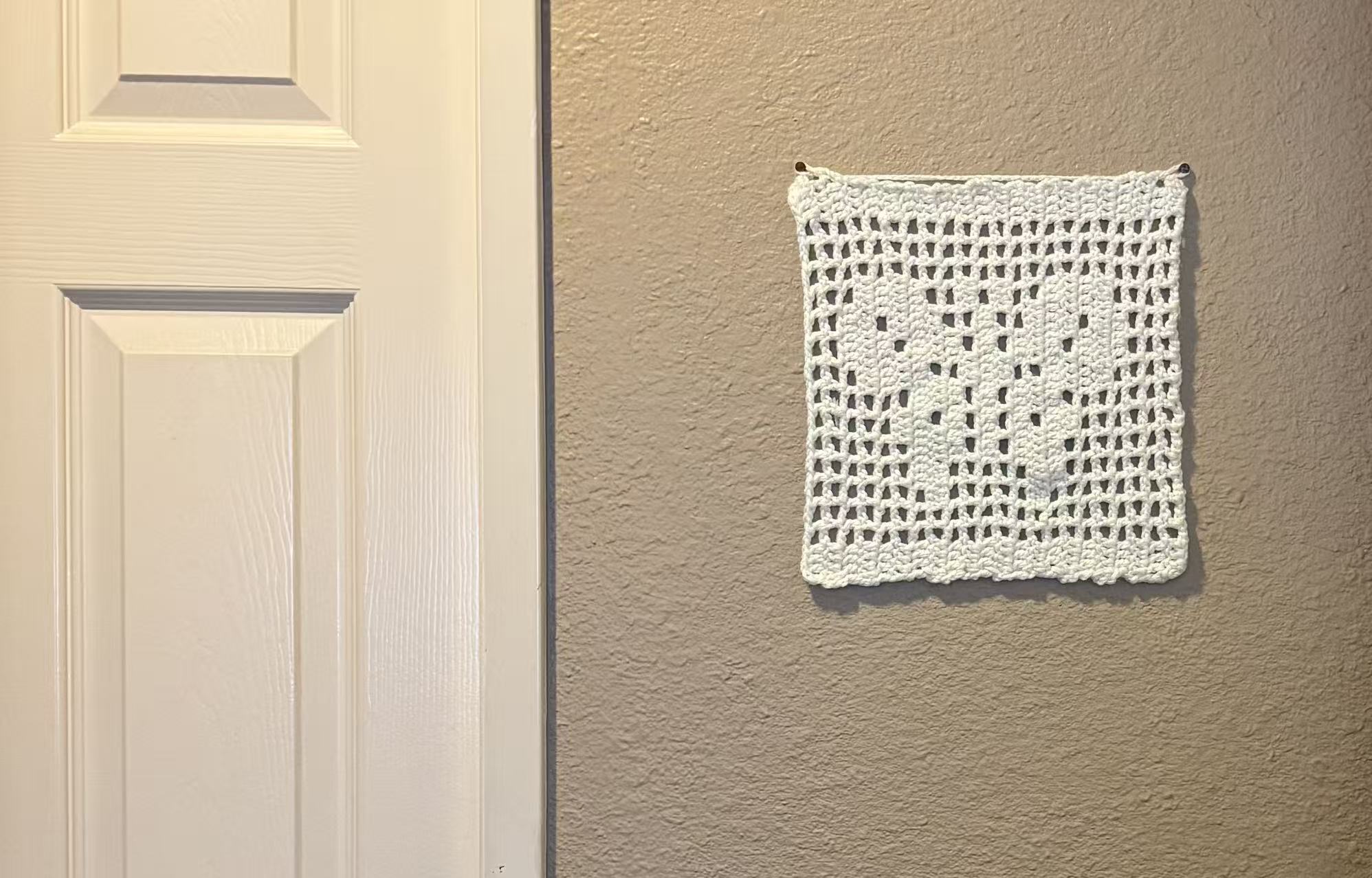
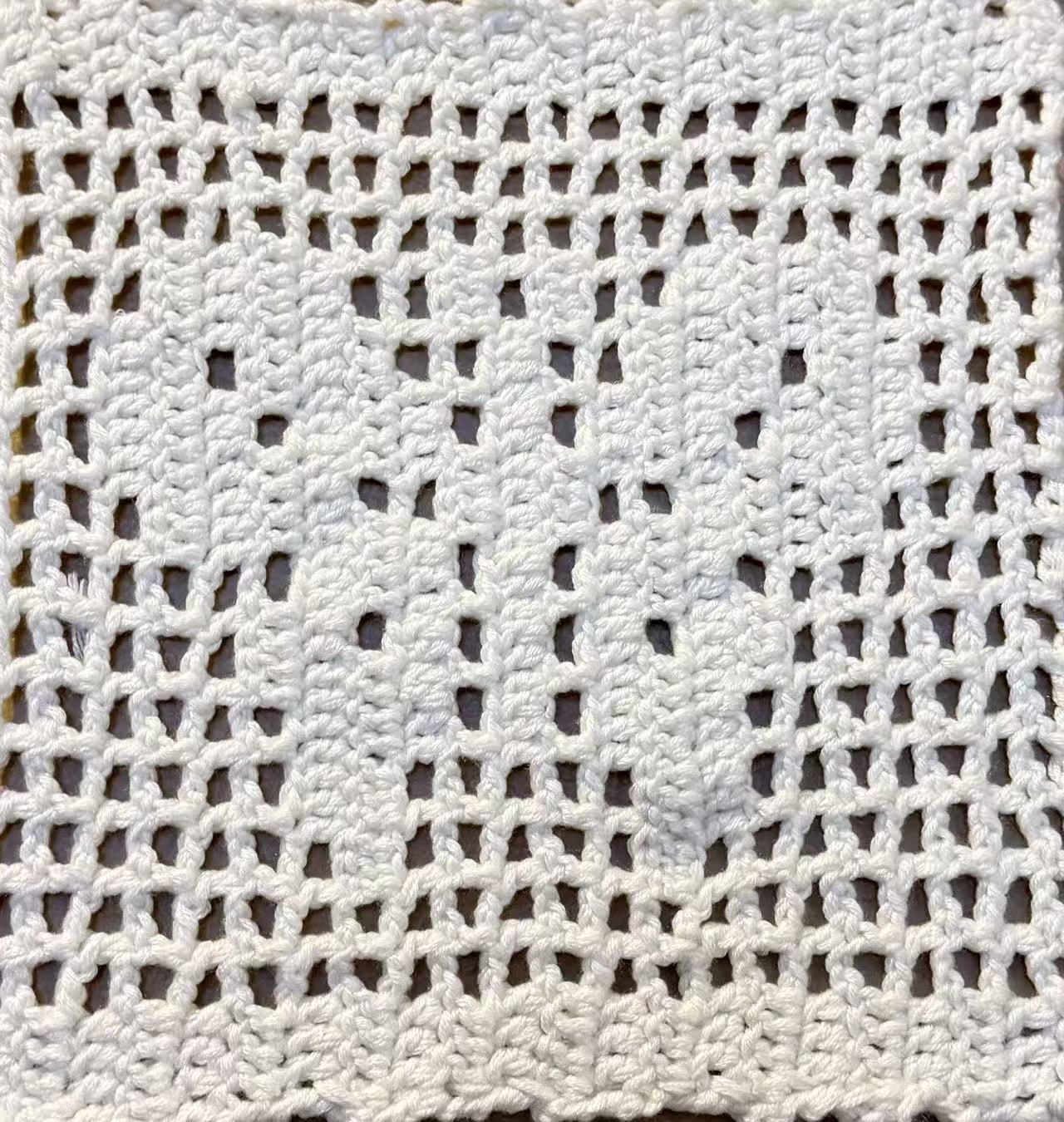
The butterfly — 1915 insertion strip, modern wall art
Figure 31 in the book, a 16-stitch-wide filet strip designed as edging for a curtain or hem. Tile it lengthwise for multiple butterflies; crochet a single repeat as a square for a coaster or wall hanging.
🦋 Open butterfly in the editor →
The owl — square medallion, antique book photo
Figure 32 in the same book. The original instructions describe it as a medallion that can also be turned and worked lengthwise into an insertion. We stored it in its medallion orientation so the upright owl is what you see when you open it — ear tufts at the top, body below.
Notation gotcha — old "tr" ≠ modern "tr"
Before about 1930, American crochet books used UK-derived terminology. When the 1915 book says "treble" or "tr," it means what we now call "double crochet" (dc). When it says "double crochet" or "dc," it means modern single crochet (sc). If you ever picked up a public-domain pattern and ended up with fabric the wrong height, this is almost always why. We translated every row of these two patterns to modern US terms so you don't have to.
Crochet attribution
Both patterns are public domain. The scan was digitized by the volunteer-run Antique Pattern Library under a Creative Commons BY-NC-SA license that applies to the scan itself. The underlying instructions and chart structure are out of copyright. If you publish or share derivatives, credit APL — it keeps the archive alive.